What are WordPress themes, plugins, and page builders?
10. May 2023
WordPress is one of the most popular content management systems (CMS) worldwide and offers a wide range of features and options to customize your website…
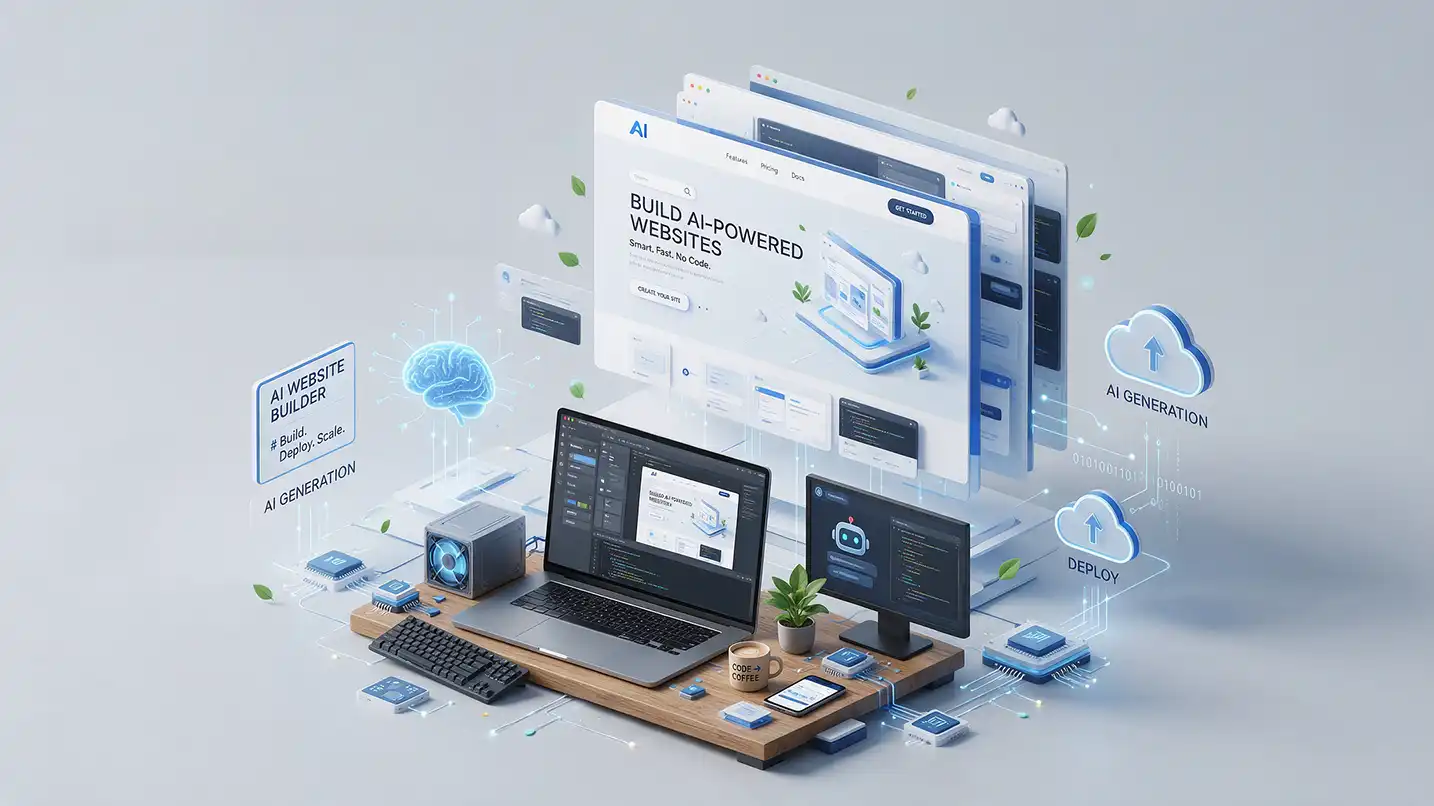
AI can now build in hours what used to take weeks. But a good website isn't created at the push of a button. We'll show you how we use AI in everyday life, where it shines, and where experience makes the difference.
Just a few years ago, every website project began with blank pages, lengthy briefings, and numerous rounds of approvals. Today, we use AI to quickly create designs, texts, and even the code for the finished pages.
We therefore redesigned our process and tested it in our own projects. The result is a four-step process where you, as the customer, see the finished product from the very beginning.
The fastest way to a good website is through good examples. Instead of describing at length what you like, simply show us.
These galleries are particularly good for inspiration:
You can browse yourself and send us two or three pages that appeal to you. Ideally, include a short note explaining what exactly attracts you: the colors, the imagery, the layout, or simply the overall feeling. If you'd rather not invest any time, we can do the search for you.
Important: We do not copy other websites. The examples serve as a guide; your design will be unique.
Using your examples, we develop a unique design with the support of AI. First, a design system is created with colors, fonts, logo and the most important building blocks, then the homepage for desktop, tablet and smartphone.
We'll discuss this design with you. If you don't like something, we'll change it now while it's still quick and inexpensive. We'll only begin implementation once you're satisfied.
What exactly a design system is and why it prevents surprises is explained in the article "What is a design system?".
While you review the design, we are already working on the content. This is based on an analysis in three areas:
Based on this analysis, the texts are generated with AI support. We review each text, supplement it with your expertise, and adapt the tone to your brand. Because design and content are created simultaneously, we save weeks compared to the traditional process.
Our tip: The most valuable thing you can contribute is real-life experience. Customer examples, frequently asked questions from everyday life, and your personal story are things no AI can invent. That's precisely what makes your website credible.
We determine the structure, not the AI. We derive which pages are needed, how the navigation is structured, and where visitors are led from your goals and the analysis.
When building a website, we work according to five principles, which we call the 5 S's. They ensure that your website not only looks good, but is also easy to maintain for years to come.
| principle | What we do | Your advantage |
|---|---|---|
| Structure | Clear structure of pages and sections, logical navigation | Visitors can quickly find what they are looking for. |
| Semantics | Correctly mark up headings, lists and content from a technical perspective | Improved discoverability on Google and AI assistants, accessible |
| cleanliness | Uniform, understandable naming of all building blocks in the code | Changes can be made quickly, even by other experts. |
| Style | Control the design centrally instead of individually on each page | A color change takes effect immediately across the entire website. |
| System | Everything is based on the released design system. | New pages automatically fit into the overall picture. |
This is precisely where the difference becomes apparent: AI can write code quickly, but without clear rules, chaos quickly ensues, which later proves costly. We define the rules and verify the result.
Our practical test paints a clear picture:
| AI is strong in | Humans remain crucial in this regard. |
|---|---|
| Initial drafts and variations in a short time | Goals, strategy and structure of the website |
| Logo ideas and color suggestions | Quality, taste and brand perception |
| Text drafts based on an analysis | Expertise, real experience and tone |
| Implementation of design in code | Clean technology, safety and data protection |
AI is a tool for us, not a replacement for experience. It makes us faster, and we pass this time on to you in the form of lower prices or more refined service.
Website creation in the AI age is faster, more transparent, and more predictable than before. You see your design before it's built, content is created in parallel, and the technology remains clean and scalable.
Have you seen a website you like? Send us the link. We'll show you what your own version could look like.
Step 1: Write to us!